
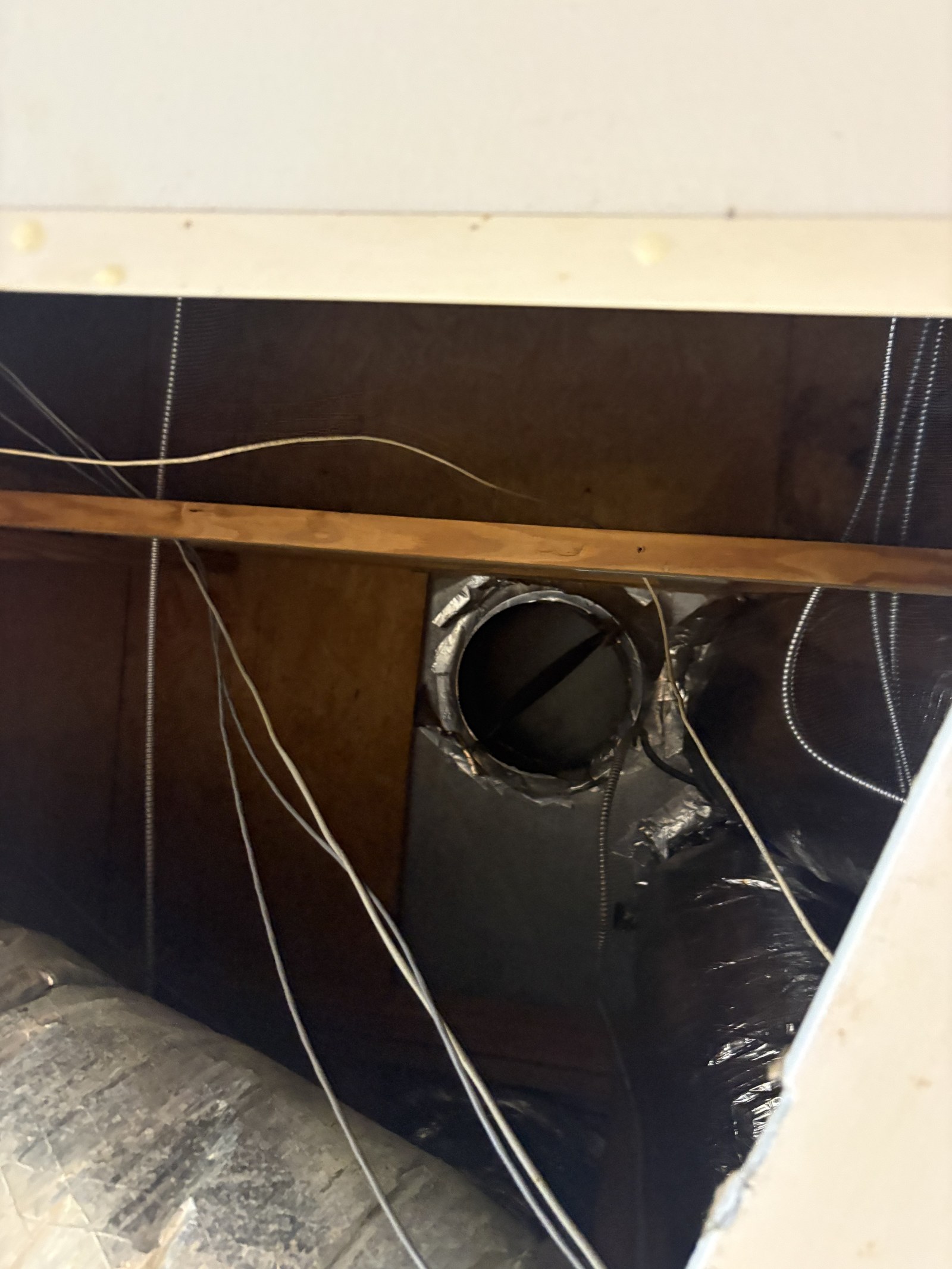
One hot corner. A missing duct connection.
The unit ran, the thermostat read correctly—but one corner of a commercial kitchen stayed hot. The answer was hiding above the ceiling tiles.
The call
A commercial kitchen was having trouble cooling its space. On the surface, everything looked fine: the rooftop unit was working, and the thermostat was working too. But in one corner of the kitchen, it was hotter than it should have been—and no adjustment seemed to change it.
Following the airflow
When the equipment checks out but one area doesn’t, we look at the air’s path. Standing at the diffuser in that corner, we noticed very little air coming out of it. That pointed us away from the unit and toward the ductwork between it and the space.
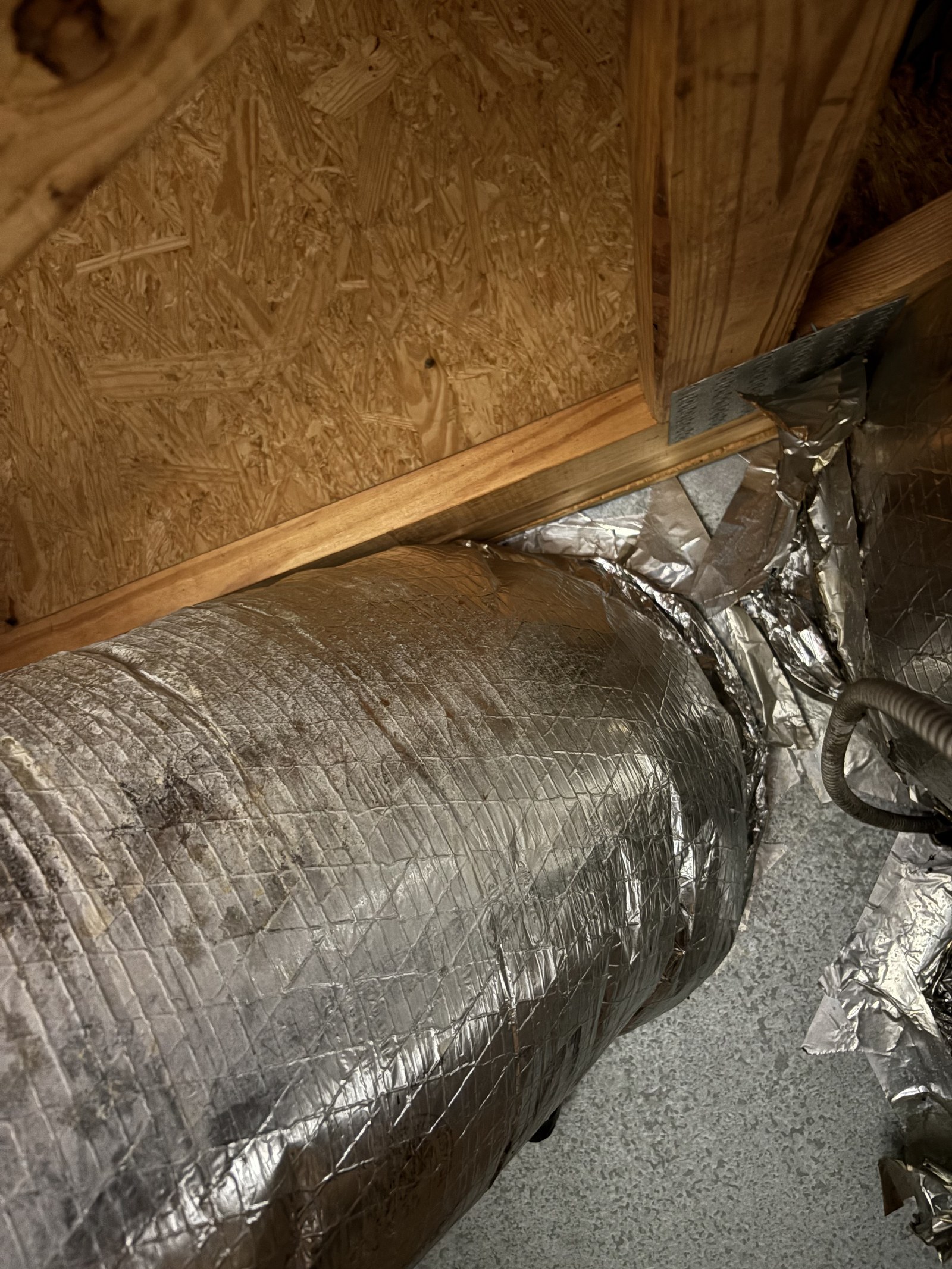
We accessed the ceiling space and followed the duct line from the unit back toward the diffuser. Partway along, we found the problem: the duct had come completely disconnected from the plenum box of the rooftop unit. Conditioned air was spilling into the ceiling space instead of reaching the kitchen.
The repair
We reinstalled the duct, reattaching it securely to the plenum box so the air has no choice but to travel where it belongs. With the connection restored, airflow returned to the diffuser—and the kitchen got its cool corner back.
The takeaway
A comfort problem isn’t always an equipment problem. In this case, the unit and the thermostat were doing their jobs—the air just never made it to the room. When one area is off while the rest of the space feels right, the ductwork deserves a look before anyone talks about replacing equipment.
When one area won’t cool
- Check each diffuser for airflow. A weak or silent vent in one zone points to the duct path, not the unit.
- Note whether the problem area is near the equipment or far from it—long duct runs are more likely to develop loose connections.
- Ask your technician to inspect accessible duct connections, especially above ceilings and around rooftop unit plenums.
- Don’t run the system harder to compensate. Conditioned air escaping into a ceiling space costs money every hour it continues.